
How AI-Generated Content Is Changing the Face of Online Information
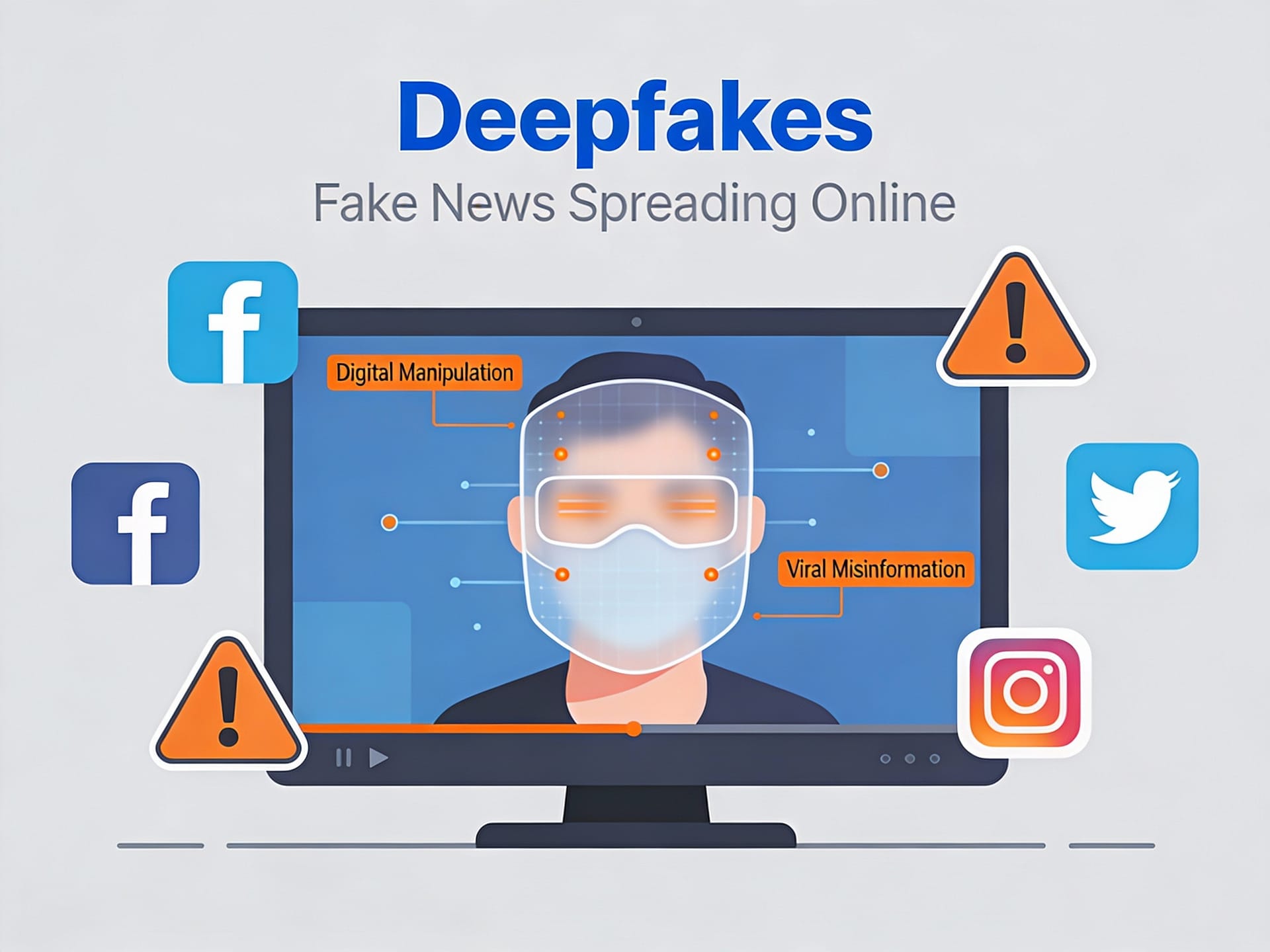
Imagine scrolling through the internet and seeing a shocking video featuring a well-known politician. Your first reactions? Surprise, emotion, the urge to share it. Now imagine it isn’t real. This is a case of deepfake and fake news – manipulative content, often AI-generated, that has moved from tech curiosity to a genuine challenge for digital trust.
In 2025, identified cases of such videos and articles rose by over 30% from the previous year, according to Sensity AI. These materials look authentic but are fully fabricated. The issue extends beyond politics, affecting finance, corporate reputation, and individuals.
AI tools are becoming more accessible, enabling almost anyone to create realistic video or audio clips. Research by Deeptrace Labs shows over 60% of viral content in recent years contained synthetic elements. This trend signals that maintaining digital trust is increasingly difficult.
Such manipulations are no longer occasional. They affect everyone from casual users to journalists and policymakers. Experts at Pew Research Center predict that by 2026, verifying information will become critical.
For ordinary people, this means we can’t always trust our eyes. Videos may be fabricated, and social media images partially or fully AI-generated. Critical evaluation of sources is essential to preserve personal digital trust.
AI itself is not the problem – it has huge creative and educational potential. The danger arises when mass production of deceptive material occurs without rules or transparency. In 2026, society may need to either implement effective safeguards or accept a diminished trust online. The Brookings Institution highlights that labeling AI-generated content and educating users can help rebuild confidence.
In this article, we explore the growth of deepfake and fake news, its societal impact, how platforms respond, and which tools assist in content verification and detection. Ultimately, each internet user must guard their own trust in the digital world.
Deepfakes and Fake News – The Scale of the Problem Online

Just a few years ago, deepfakes and fake news were curiosities for tech enthusiasts. Today, they are a regular part of online life. Sensity AI reports that between 2024 and 2025, identified cases increased by over 30% (Sensity AI Report), affecting industries and users globally.
Video remains the main medium for manipulation. Politicians, influencers, and brands are often featured in fabricated content. Audio manipulation, like voice cloning, is also growing, alongside AI-generated images and graphics – from memes to ads. Deeptrace Labs reports that in 2025, 62% of detected cases were video, with the remainder mostly audio and images. Tools for detecting manipulated content are increasingly crucial (Deeptrace Labs).
Where Abuses Occur Most
Politics, finance, and public figure reputations are particularly vulnerable. During elections in the US and Europe, experts recorded hundreds of attempts to manipulate opinion. In India, a deepfake used to impersonate a bank statement caused panic before it was debunked (CNBC).
Cybersecurity experts warn that AI content production is outpacing monitoring. Europol reports note that criminals increasingly use these tools for fraud and blackmail (Europol Reports). Even ordinary users contribute to spreading false content by sharing it unknowingly.
Why This Has Become a Mass Trend
The scale is obvious – everyone knows someone who encountered content that appeared real but was fake. Online misinformation is growing quickly, and AI tools make realistic video creation widely accessible. MIT Media Lab reports that publicly available generation tools increased by 50% over two years (MIT Media Lab).
Fake news and AI-generated content appear across social feeds, emails, and institutional communications. This forces users to think critically, use detection tools, and verify sources. Ordinary users are becoming guardians of their own digital trust, and by 2026, this skill may be essential.
How AI-Generated Content Impacts Democracy and Election Campaigns

Imagine an election campaign where videos could be manipulated. By 2026, this may become common, and misleading content created with AI could influence public opinion. A Pew Research Center report shows that 64% of American adults worry that such material could mislead voters (Pew Research Center).
These cases are already happening. In 2022, a video surfaced in the US where a politician allegedly admitted to controversial actions. The recording was fabricated but sparked waves of comments before being debunked (CNBC). This shows how quickly false content can spread before verification.
Impact on Election Campaigns
Manipulated videos and audio can appear real, influencing voter opinion and threatening trust in media and democratic processes. Experts from Brookings Institution emphasize that without verification mechanisms, voters become easy targets for manipulation.
Trust in Recordings and “Video Evidence”
When videos can be faked in hours using AI, trust in recordings is challenged. Even professional media must verify content, while ordinary users may doubt what they see. Erosion of digital trust can have far-reaching political consequences (European Leadership Network).
The Speed of False Content Spread
Social media accelerates the spread of misleading materials. MIT Media Lab analysis shows such content spreads on average six times faster than real information (MIT Media Lab). Even minor manipulations can have large impacts quickly.
In conclusion, misleading content is more than a tech problem – it’s a challenge for democracy. Elections and campaigns are increasingly vulnerable. In 2026, implementing verification, transparency, and user education will be essential to protect digital trust.
AI-Generated Content and Regulatory Policies on Platforms
As the problem of deepfake and fake news escalated, tech platforms and governments could no longer ignore it. Facebook, Twitter, YouTube, and TikTok introduced measures to label AI-generated content and remove videos identified as deepfake and fake news. Meta created a tool specifically designed to detect deepfake and fake news and flag potentially misleading AI-generated content in user feeds, reinforcing the importance of content verification (Meta Newsroom).
Platform Initiatives Against Deepfakes and Fake News
Platforms began labeling AI-generated content, including videos and images, so users could immediately identify potential deepfake and fake news. YouTube reinforced its policy for removing manipulated content, while TikTok introduced educational programs to help users spot deepfake and fake news and misinformation online (YouTube Policy). These measures highlight the central role of content verification and the ongoing effort to maintain digital trust in online platforms.
Government Actions on Deepfakes and Fake News
Governments are also responding with regulations targeting AI-generated content and online manipulation. In the US, Congress is drafting bills that mandate disclosure of AI-generated content in political and commercial contexts, aiming to combat deepfake and fake news and protect digital trust (Congress.gov). In the European Union, the Digital Services Act requires platforms to monitor, report, and remove deepfake and fake news and other AI-generated content, strengthening content verification practices and mitigating the spread of misinformation online.
Impact of Platform and Government Measures
Early outcomes are promising: labeling AI-generated content helps users recognize potential deepfake and fake news and misinformation online, while swift platform responses limit the viral spread of manipulative content. Nevertheless, the race between creators of deepfake and fake news and content verification systems continues. Governments implement regulations, but technologies and bypass methods evolve rapidly, making the preservation of digital trust an ongoing challenge.
For everyday internet users, the lesson is clear: any online content could be manipulated, so employing content verification tools and critically evaluating AI-generated content is essential. Maintaining digital trust requires active participation – passive consumption is no longer sufficient. Education, critical thinking, and vigilance against deepfake and fake news and misinformation online are our most effective defenses.
Detecting Deepfakes and Online Manipulation – What Works Best
Imagine this scenario: you’re watching a video online and suddenly suspect it might be deepfake and fake news. How can you verify if the material is real? This is where detection technologies come in. While it may sound complicated, many of these tools are becoming increasingly accessible for everyday internet users.
How Detection Systems Work
Most systems analyze subtle imperfections in video and audio recordings. Algorithms detect anomalies in facial expressions, eye movements, breathing, and even voice patterns. Some tools use AI to compare recordings with reference material to identify manipulation. Notable initiatives include FaceSwap (open source) and Deepware Scanner.
Limitations of Detection Technology
Detection is not foolproof. The race between AI creating deepfake and fake news and AI detecting it resembles an arms race. Algorithms can be fooled by increasingly realistic content, and false positives can occur – sometimes genuine videos are flagged as manipulated. Scalability is also a challenge, as millions of videos are uploaded daily, requiring enormous computational resources (ArXiv: Deepfake Detection Challenges).
Tools and Initiatives for Detection
More tools are emerging to help users and platforms detect suspicious material. Open source FaceForensics++ allows video analysis for manipulation. Deepware Scanner scans videos for potential anomalies (Deepware AI). The EU AI Watch project monitors techniques used in deepfake and fake news and supports the development of detection standards (EU AI Watch).
Although detection technologies are improving, they cannot replace critical thinking. Even the best tool cannot substitute healthy skepticism. For everyday internet users, this means learning to use detection tools, verifying sources, and adopting a “don’t trust your eyes – check the facts” mindset as part of daily online activity.
Protecting Yourself from Online Manipulation – Tips for Users

Picture a typical day online: scrolling through your feed, watching videos, reading articles, sharing interesting content with friends. Yet behind the scenes, something many of us don’t notice is happening – deepfake and fake news are gradually entering our daily digital lives, testing our ability to distinguish truth from manipulation.
Why “Don’t Trust Your Eyes” Is Becoming the Norm
A few years ago, a video or photo was considered evidence. Today, even realistic-looking content can be fabricated using AI. UNESCO reports that the growing use of deepfake and fake news can undermine trust in media and lead to a global information crisis (UNESCO Report 2023).
Risks for Internet Users
Main threats include financial scams, emotional manipulation, and loss of trust in media. Recent cases show deepfake and fake news being used to impersonate family members in “CEO scams” or to create false statements by public figures to extort money (Europol).
How Users Can Protect Themselves
Not all hope is lost. There are simple steps anyone can take: verify sources – ensure information comes from reputable institutions or media; remain skeptical of viral content – not every emotional video or article is true; use fact-checking tools – websites like Snopes and PolitiFact help confirm dubious information.
Additionally, learning to recognize signs of deepfake and fake news – unnatural eye movements, odd shadows, speech irregularities – increases online safety. Educational and public organizations, such as the FCC, provide guides and training materials to strengthen societal resilience against manipulation.
In practice, this means each of us becomes the guardian of our own trust. Conscious internet use, critical thinking, and verifying information are essential skills in the era of AI-generated content. While technology offers amazing possibilities, it’s up to us users to decide whether we let false content shape our perception of reality.
2026 – Turning Point or the Beginning of a New Normal in the Era of Digital Disinformation
The year 2026 is fast approaching and is becoming a symbol of a moment when the fight for trust online may reach a breakthrough. Deepfakes and fake news are no longer a technological curiosity – deepfakes and fake news have become part of everyday life, prompting reflection on how we protect truth and recognize AI-generated content on the internet.
Can Trust in Digital Content Be Restored?
Experts agree: it’s possible, but it requires collaboration from multiple parties. Tech platforms are implementing AI-content labels, AI-generated content verification, and detection tools. Governments are introducing regulations targeting deepfakes and fake news, and users are learning to critically approach all AI-generated content and potential deepfakes and fake news. As the OECD report shows, combining technology, education, and regulation can significantly reduce the negative impact of deepfakes and fake news (OECD Report on AI Governance).
Possible Scenarios for Deepfakes and Fake News
One of the most realistic scenarios is the widespread labeling of AI-generated content, allowing users to distinguish synthetic materials from authentic ones. Increasingly, digital content signatures are also being discussed – systems that can verify the authenticity of videos, images, and other AI-generated content. This could establish a new standard for combating deepfakes and fake news online.
Some experts predict, however, that this may only be the beginning of a new normal. Deepfakes and fake news will continue to evolve, and users will need to adopt a skeptical approach to every video, photo, article, and piece of AI-generated content. AI-generated content could become standard, and trust in information will require active, conscious participation to mitigate the influence of deepfakes and fake news.
Implications for Media, Creators, and Users
For media outlets, this means verifying every published piece and using AI-generated content detection tools to identify deepfakes and fake news. Content creators will need to clearly indicate which materials are AI-generated content to maintain credibility. Users, meanwhile, become the guardians of their own trust – source verification, fact-checking, and critical thinking are essential to avoid being misled by deepfakes and fake news or manipulated AI-generated content.
In summary, 2026 could be a turning point or the start of a new normal – it all depends on how quickly effective protective mechanisms against deepfakes and fake news and AI-generated content are implemented and how actively users verify content. Trust in information will not restore itself – it requires a combination of technology, education, and conscious use of AI-generated content. If these elements are successfully applied, we have the chance to create a digital space where deepfakes and fake news do not dominate reality and AI-generated content is properly identified and verified.
The Battle for Trust as the Core Challenge of Deepfakes and Fake News

At the end of this journey, looking at all the challenges posed by deepfakes and fake news, it becomes clear: trust is the core of the future of the internet. Deepfakes and fake news threaten digital trust directly, but the greater issue is the lack of rules, transparency, and critical thinking. Every internet user has a role to play in countering deepfakes and fake news and protecting online trust.
Facts vs. Opinions
Data shows that the number of deepfakes and fake news continues to grow exponentially. Tools for detecting deepfakes are improving, yet they still lag behind sophisticated creators of manipulations. Cybersecurity reports emphasize that only rapid user education, transparent labeling, and widespread use of deepfake detection and AI-generated content verification tools can curb the spread of deepfakes and fake news (ArXiv: Deepfake Detection Challenges, Sensity AI Report).
At the same time, editorial opinion should be distinguished: without authenticity standards, critical thinking education, and transparency in AI-generated content, trust in information will decline steadily. Monitoring organizations warn that deepfakes and fake news continue to challenge users and platforms alike (Deeptrace Labs).
What Can We Do?
First, education is vital. Internet users must recognize that even realistic videos or images can be manipulated. Second, tools for detecting deepfakes and analyzing AI-generated content must be widely available and intuitive. Third, clear regulations and transparency from creators of AI-generated content are essential – both platforms and governments must work together to reduce the impact of deepfakes and fake news.
In practice, this means every user becomes a guardian of digital trust. Source verification, using fact-checking tools, applying deepfake detection technologies, and skepticism toward viral content become routine habits. AI-generated content requires active engagement – passive consumption is no longer safe. Every video or article shared must be carefully checked to mitigate the risk of spreading deepfakes and fake news.
Final Reflection
In conclusion, 2026 could be a pivotal year: trust online will either be restored or remain in crisis. Deepfakes and fake news alone do not destroy trust – it is the absence of rules, lack of transparency, and misuse of deepfake detection tools that undermine confidence. By understanding the significance of deepfakes and fake news and deploying deepfake detection and AI-generated content verification, platforms, governments, and users can establish a digital space where authenticity and verified AI-generated content prevail.
This battle involves everyone. In the era of AI and AI-generated content, trust is our most valuable asset. Tools for detecting deepfakes and verifying AI-generated content are indispensable for conscious internet use and for mitigating the influence of deepfakes and fake news.
Expert Advice
The editorial team, supported by digital security analysts and AI researchers, emphasizes that in the era of deepfakes and fake news, every internet user should consciously verify content and use tools that help detect manipulations in AI-generated content.
A report from the Brookings Institution shows that widespread labeling of AI-generated content and user education are key to limiting the spread of deepfakes and fake news (Brookings Institution).
Analysis by MIT Media Lab indicates that deepfakes and fake news spread on average six times faster than real information, which requires not only technology but also active engagement from users interacting with AI-generated content (MIT Media Lab).
- Use deepfake detection tools: open-source initiatives such as FaceSwap or Deepware Scanner help quickly assess the authenticity of AI-generated content and videos.
- Check your sources: make sure that articles, videos, and posts come from credible sources, such as research institution reports or official government announcements, to reduce exposure to deepfakes and fake news.
- Learn to recognize characteristics of deepfakes: unnatural eye movements, strange shadows, or speech anomalies can signal manipulations in AI-generated content. (FCC)
For users, the editorial recommendation is clear: critical thinking, source verification, and the use of detection tools should become a daily habit. In the era of AI-generated content, an active approach to verification is the best protection against manipulation, deepfakes and fake news, and digital disinformation.
Support My Work
Thank you for reading this post! If you found it helpful, you can buy me a coffee ☕.
Your support motivates me to keep creating content about online earning, AI-generated content, fighting misinformation online, and maintaining digital trust.

Sebastian is an AI and digital marketing expert who has been testing online tools and revenue-generation strategies for years. This article was prepared by him in collaboration with our team of experts, who contribute their knowledge in content marketing, UX, process automation, and programming. Our goal is to provide verified, practical, and valuable information that helps readers implement effective online strategies.