
A New Era of Creativity

Artificial intelligence in music creation and remixes has become one of the most exciting tools transforming the way musicians work around the globe. A few years ago, composing, mixing, or arranging required endless hours in a professional recording studio. Today, thanks to machine learning algorithms and neural networks, AI supports the creative process at every stage — from generating melodies and rhythms to final mastering. The story of how AI changes music is not just about faster production. It’s about opening entirely new artistic paths that let creators experiment with sound in ways that were once impossible.
Modern AI systems analyze millions of existing tracks, recognizing harmonic, rhythmic, and tonal patterns typical for various genres. As a result, artificial intelligence in music creation and remixes can generate compositions inspired by jazz, rock, electronic, or classical music — even blending these styles into something completely new. Tools such as Amper Music, AIVA, or Soundful allow artists to create a full song in just minutes, adjusting tempo, instruments, and mood to the project’s needs. This marks a huge shift in the creative process — instead of spending hours recording each part, artists can now focus on the concept and emotions they want to express.
But this technology goes far beyond automatic composition. AI in music is now capable of creating intelligent remixes that adapt to a song’s mood, genre, and instrumentation. By analyzing the structure of the original track, AI can suggest changes that give it new life. For example, an algorithm can reimagine a pop song as lo-fi, trap, or jazz while preserving its signature motifs. It’s a perfect demonstration of how AI changes music — not only through automation but also by inspiring people to explore new sounds and styles.
What’s even more impressive is how accessible today’s AI tools have become. Platforms like Boomy or Mubert let anyone create music, even without prior production experience. Just select the genre, tempo, and mood — and artificial intelligence in music creation and remixes takes care of the rest, producing professional-sounding tracks. This democratizes music production, giving everyone — from hobbyists to professional producers — the chance to experiment with sound and develop a unique style.
AI in music also assists with post-production, including mixing and mastering. By analyzing thousands of professional recordings, algorithms automatically adjust volume levels, stereo balance, EQ, and dynamic compression. That means even beginners can achieve a professional final result without expensive software or sound engineers. Meanwhile, experienced artists use AI to test alternative mixes, compare versions, and discover new arrangement ideas — speeding up the creative process significantly.
One of the most fascinating aspects of how AI changes music is the possibility of real-time collaboration between creators across the globe. AI-based systems can synchronize tracks, analyze key and tempo, and automatically generate missing arrangement elements — drums, basslines, vocals, or ambient effects. This allows musicians to co-create without geographical or time barriers, opening a new chapter in the history of music production.
AI also plays a growing role in personalizing the listener’s experience. Streaming platforms like Spotify and YouTube Music use artificial intelligence to recommend songs tailored to users’ individual preferences. But increasingly, AI goes even further — generating real-time music based on mood, activity, or even weather. This not only changes how we listen to music but also redefines how AI changes music as a cultural phenomenon — making it more dynamic, interactive, and deeply personal.
In conclusion, creating music with AI is far more than a tech novelty — it’s a full-scale revolution in sound. Artificial intelligence in music creation and remixes empowers artists to experiment with new styles, instruments, and tempos — all in real time. AI doesn’t replace human creativity; it amplifies it. It acts as a catalyst, collaborator, and source of inspiration. With AI, music becomes more accessible, diverse, and open to innovation — and this is only the beginning of how AI will continue to shape music in the future.
How AI Creates Music
Artificial intelligence in music creation and remixes uses advanced technologies that allow computers to analyze, understand, and generate sounds on an unprecedented scale. AI in music enables not only the composition of new tracks but also the creation of remixes and arrangements in ways that were once possible only for experienced producers. AI music algorithms can dive deep into harmony, rhythm, dynamics, and instrumentation, producing compositions that are both cohesive and creative, often introducing innovative sounds difficult to achieve with traditional methods.
The first step involves analyzing vast databases of musical examples — from classical, jazz, and pop to modern electronic and experimental music. Algorithms of artificial intelligence in music creation and remixes learn to recognize melodic, rhythmic, and structural patterns, understanding the rules of composition across genres. The analysis also covers dynamics, modulations, chord progressions, and interactions between instruments, allowing AI to generate high-quality compositional suggestions. Based on this, AI creates new musical ideas that respect the style of the original tracks while sometimes introducing completely unexpected and innovative elements.
Generative models such as GANs (Generative Adversarial Networks) or LSTMs (Long Short-Term Memory) allow AI to produce continuous sequences of sound that are both harmonious and unique. The process of creating music with AI is iterative — the algorithm generates an initial sketch, then optimizes it according to parameters like tempo, genre, mood, or instrumentation. Additionally, AI systems can propose alternative harmonies, rhythms, or arrangements in real time, allowing creators to experiment and quickly test different versions. This makes AI-generated remixes and compositions fully customizable in style and tailored to specific audiences or distribution platforms.
Moreover, AI in music allows for automatic effect adjustment, track balancing, sample and loop generation, and intelligent mixing of elements. This makes the creative process more flexible, letting creators focus on experimenting and refining sound rather than labor-intensive technical production tasks. In practice, both professional producers and music enthusiasts can create complex, professional-sounding compositions faster and with greater artistic freedom.
AI also plays a role in post-production — automatic mixing, mastering, and effect application enable fast and precise sound quality improvement. AI music creation tools offer full control over composition parameters while automating routine tasks, significantly speeding up the production process. Even users without prior musical experience can produce professional-quality tracks and remixes.
In summary, AI in music and remixes combines data analysis, advanced generative models, and full user control over the final output. Creating music with AI is not only the future of the music industry but already a practical tool supporting artists and producers in quickly and creatively producing exceptional compositions. By leveraging AI, musicians can experiment with complex harmonies, unique rhythms, and innovative sound textures that would be difficult or time-consuming to achieve manually. The technology allows for rapid iteration, enabling creators to test multiple variations of a track, explore unconventional combinations of genres, and instantly refine melodies, arrangements, or instrumental layers. AI tools also facilitate collaboration across distances, allowing multiple contributors to work on the same project in real time, while ensuring coherence and synchronization. This integration of human creativity with machine intelligence enhances productivity, inspires new artistic directions, and democratizes music production, making professional-level results accessible even to those without formal training or high-end studio equipment.
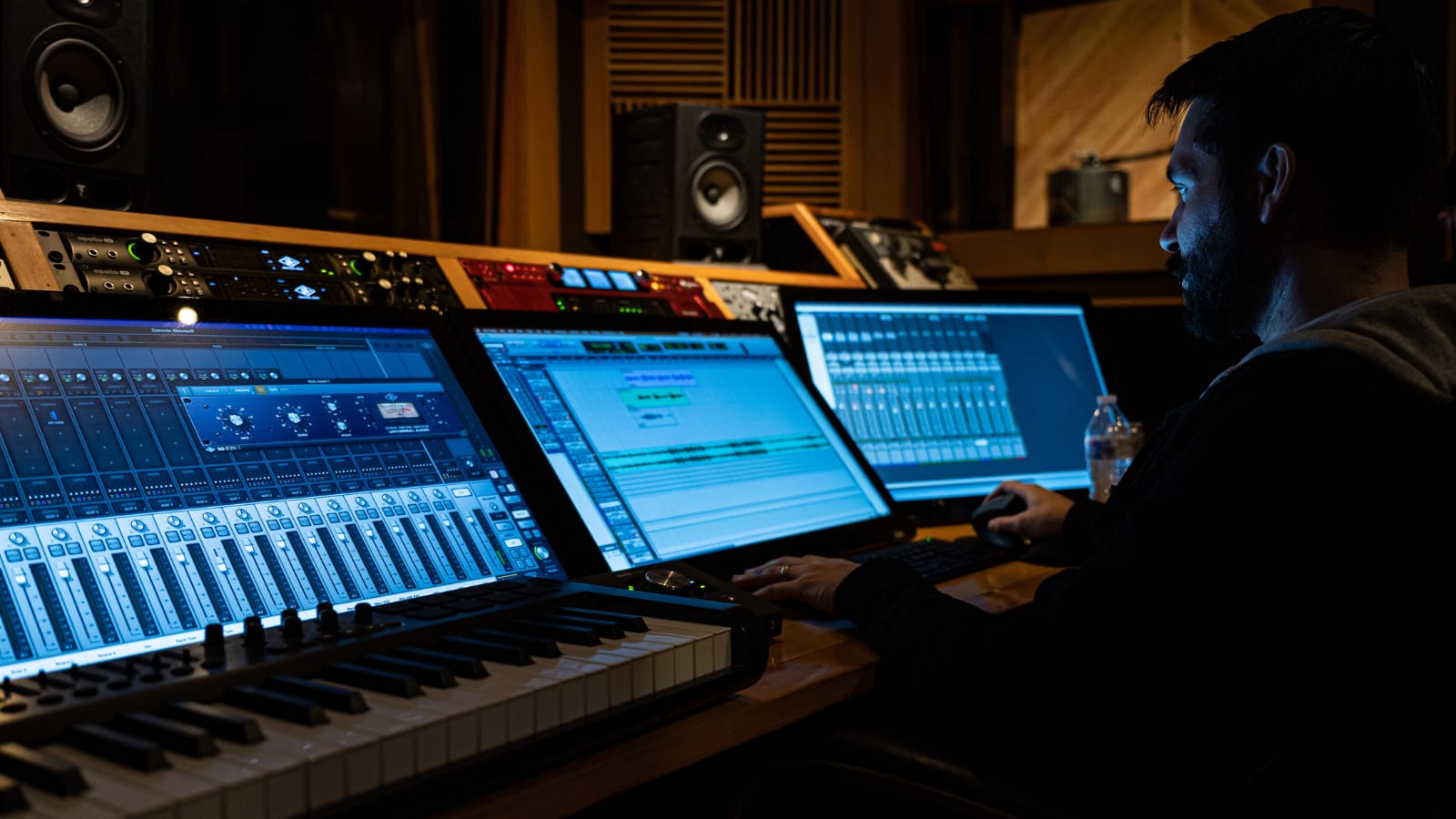
Artificial Intelligence in Remixing Tracks
Moreover, AI in music allows creators to experiment with different moods, dynamics, and song structures. Algorithms can suggest variations in melody, harmony, and rhythm that can completely transform the listener’s perception of the original track. Artists can test multiple arrangements simultaneously, compare them, and select the ones that best achieve their intended artistic effect. This makes the remixing process more interactive and creative, enabling the rapid implementation of new ideas.
Artificial intelligence in remixes also enables real-time collaboration among multiple artists. With AI tools, musicians from different parts of the world can work on the same track simultaneously — algorithms synchronize tracks, suggest harmonic and rhythmic additions, and automatically adjust tempo and key. This opens entirely new possibilities for collaborative music creation, eliminating the barriers of being physically present in a recording studio.
Furthermore, AI can automatically adapt remixes for different formats and music distribution platforms, such as streaming services, radio, or social media. The systems analyze audio parameters, volume levels, and dynamics, optimizing tracks for listening quality across various environments. This allows creators to produce professional-sounding remixes faster and more efficiently than ever before.
In summary, artificial intelligence in music creation and remixes not only accelerates production but also significantly enhances creativity, enables global collaboration, and allows experimentation with new genres and sounds. AI has become an invaluable tool that redefines music creation, opening entirely new creative opportunities for artists, producers, and music enthusiasts.
Importantly, AI in music not only improves efficiency but also nurtures the creativity of creators. The ability to quickly compare multiple versions of a track, test different arrangements, and make instant compositional changes allows experimentation with sound, rhythm, and harmony. At the same time, challenges arise, such as copyright issues, responsibility for generated content, and the impact of automation on the music market. Nevertheless, AI-powered remixes represent a rapidly growing field shaping a new standard in music creation and consumption.
In conclusion, artificial intelligence in music creation and remixes opens new opportunities for artists, producers, and music enthusiasts. AI makes the process of producing tracks and remixes faster, more creative, and accessible to a broader audience. AI music algorithms can generate professional-sounding compositions, and remix tools allow exploration of new styles and experimentation, resulting in innovative and diverse music.
Popular AI Tools for Music Creation and Remixes
Moreover, AI in music allows creators to quickly test multiple versions of a single track — something that used to take hours in a studio. Algorithms can generate different arrangements in real time, suggesting new rhythmic structures, harmonic modulations, additional instrumental layers, or spatial effects. This makes the remixing process more flexible, allowing artists to experiment with unusual genre combinations, such as blending electronic music with jazz or pop with classical music. Creators can rapidly adjust song layouts, test different tempos and rhythms, and combine instruments in ways that previously required extensive experience and expensive studio equipment.
Artificial intelligence also enables automatic generation of vocal variations, addition of harmonies, and key modulation depending on the track’s mood. Algorithms can analyze the emotional character of the original composition and propose arrangements that enhance the intended artistic effect. This not only saves time for artists but also expands their creative possibilities, allowing the creation of entirely new musical styles that were previously difficult to achieve.
AI-powered remixing also facilitates remote collaboration between artists across the globe. Algorithms synchronize recording tracks, automatically adjust tempo, key, and song structure, and even suggest harmonic additions. This makes group and collaborative music production possible without physical presence in a studio, allowing creators to exchange ideas and test different versions in real time. As a result, AI transforms traditional music production into a more interactive and global process, opening the door to cross-cultural collaborations and projects that blend diverse musical styles.
Additionally, AI in music allows for automatic adaptation of remixes to various distribution platforms, such as streaming services, radio, or social media. The systems analyze dynamics, volume levels, and sound quality, optimizing tracks to ensure professional-sounding results across all listening conditions. This enables any creator — professional or hobbyist — to publish high-quality remixes faster and more efficiently.
In summary, artificial intelligence in music creation and remixes not only accelerates production but also enhances creativity, enables global collaboration, and opens opportunities to experiment with new sounds and musical genres. AI redefines the way music is created, making the creative process more interactive, inspiring, and accessible to a broader range of artists.
Importantly, AI in music not only increases efficiency but also nurtures creators’ creativity. The ability to compare multiple versions, make rapid changes, and generate new musical ideas allows artists to refine their craft and expand their artistic horizons. At the same time, challenges such as copyright issues, responsibility for generated content, and automation’s impact on the music market emerge. Nevertheless, AI-powered remixes represent a dynamic, rapidly evolving field that is reshaping music creation and consumption.
In conclusion, artificial intelligence in music creation and remixes opens new possibilities for artists, producers, and music enthusiasts. AI makes the process of producing tracks and remixes faster, more creative, and accessible to a wide audience. These technologies allow experimentation with new styles, sounds, and musical structures, ultimately contributing to the emergence of innovative and diverse music.

Challenges and Controversies Around AI in Music
Artificial intelligence in music creation and remixes opens new possibilities, but it also brings many challenges and controversies that continue to spark discussion in the music industry. One of the most pressing issues is copyright. Who owns music created by AI? Is it the algorithm developer, the tool user, or perhaps the program itself? Current legal regulations often lag behind rapid technological development, leading to ambiguities and disputes.
Moreover, using artificial intelligence in composing music and remixes raises questions about the future of artists. Will AI replace musicians and producers? While algorithms can produce tracks that sound professional, many argue that AI cannot fully capture the emotion and individuality conveyed by human creators. Nevertheless, this technology is already reshaping how artists work, forcing adaptation and collaboration with AI tools.
Ethics in AI music creation is another critical aspect. Is generating music based on existing works without the original authors’ consent fair? How can creators avoid plagiarism while maintaining originality? These are questions the industry must address to ensure fair and ethical competition.
Technical challenges are also significant — although AI can produce music, limitations still exist regarding sound quality and naturalness. Models must be continuously refined, and tool developers work to ensure AI is as helpful as possible, rather than a full replacement for human creativity.
In summary, artificial intelligence in music creation and remixes is a fascinating yet complex field that requires thoughtful regulation, ethical decisions, and continuous technological development. Challenges and controversies are a natural part of this evolving process that shapes the future of the music industry.
The Future of Music with AI
Artificial intelligence in music creation and remixes is a technology already influencing the music industry, and its future promises to be even more exciting. Trends indicate that AI will be increasingly integrated with other technologies such as virtual reality (VR), augmented reality (AR), and interactive music environments, creating entirely new experiences for both listeners and creators.
Automated music creation by AI will become a standard, not only streamlining production but also enabling personalized tracks for individual listeners. Imagine music apps that generate remixes or full compositions tailored to the user’s mood, activity, or preferences in real time. This represents a massive shift that could revolutionize how we consume music. In addition to customization, AI can analyze listener behavior and emotional responses to continuously adapt the music experience, offering context-aware soundtracks for workouts, study sessions, or relaxation. Such intelligent systems could integrate data from wearable devices, streaming habits, or environmental cues, creating an unprecedented level of interactivity. For artists, this technology opens the door to releasing multiple personalized versions of a single track, experimenting with new structures, instruments, or dynamics while reaching audiences in more meaningful ways. Ultimately, AI-driven music personalization blends creativity and technology, transforming the traditional one-size-fits-all approach into a dynamic, listener-centric model that enhances engagement and emotional connection with the music.
The future of music with AI also involves the evolution of AI music algorithms that will better understand musical structure, emotions, and cultural context. As a result, generated compositions will become more sophisticated and personalized, providing creators with tools to craft increasingly original works. Artificial intelligence in music composition and remixes will thus serve not only as an automation tool but also as a source of inspiration and a creative partner.
It is also worth noting that AI will support music education, making learning instruments, composition, and music production more interactive and accessible. Automating creative tasks will allow musicians to focus on the artistic side of their work, spending less time on technical aspects.
In conclusion, the future of music with AI is full of opportunities and challenges. The integration of artificial intelligence with modern technologies and its advancement in automated music creation and remixes heralds a new era in music history, where the boundaries between human and machine blur, and creativity gains unprecedented new dimensions.
Summary and Encouragement to Experiment with AI in Music
Artificial intelligence in music creation and remixes opens up a fascinating world of new creative possibilities. Thanks to advanced AI music algorithms, the process of composing and remixing becomes faster, more accessible, and full of creative inspiration. AI tools for remixes and automatic music generation are transforming the way music is created and consumed, blending modern technology with artistic passion.
While AI brings challenges, such as copyright and ethical considerations, its potential in the music industry is enormous. The future of music with AI promises further integration with other technologies, personalized tracks, and new educational opportunities. Artificial intelligence will not replace artists but will become their partner, supporting the creative process and inspiring experimentation.
We encourage all music creators, both professionals and enthusiasts, to explore the world of AI in music. Try the available tools, experiment with different styles and remixes, and most importantly – stay open to new technologies that can enrich your creativity and open doors to previously unexplored musical spaces.
Artificial intelligence in music is not the future – it is the present, waiting for your discoveries and creative expression.
Expert Advice
Music technology specialists and AI innovation strategists highlight that the main challenge in 2026 is not just creating new AI music tools — it’s ensuring they produce musically meaningful and commercially viable output. Our editorial team emphasizes that artists and studios should focus on blending AI capabilities with human creativity, rather than relying solely on automated generation.
Experts note that while AI can accelerate composition, arrangement, and sound design, quality control remains critical. Over 60% of studios experimenting with AI report that outputs often need substantial human refinement (MusicTech Insights, 2025). Those who integrate AI into structured workflows, with clear roles for human and machine input, achieve higher efficiency and more polished results.
Industry analysts also advise music investors and producers to examine adoption carefully. Popularity of an AI tool does not guarantee artistic or commercial success — real metrics include audience engagement, production speed, and reduction of repetitive tasks. Demonstrated use in professional releases and collaborations is a more reliable indicator than demo videos or social media hype.
- Prioritize meaningful output: select AI tools that enhance creativity, generate usable stems, or assist with arrangement.
- Integrate with human workflows: ensure AI complements musicians rather than replaces critical creative decisions.
- Track quality rigorously: monitor how much editing is needed and maintain consistency across projects.
- Invest in scalable platforms: choose tools that can support multiple artists, tracks, or production pipelines.
- Provide training & guidelines: even the most advanced AI fails without clear usage protocols and artist familiarity.
In conclusion, experts agree that achieving strong AI-driven music production requires strategic integration, careful quality control, and disciplined workflows. Treat AI as a long-term creative partner, not a one-click replacement for artistic skill.
Support My Work
Thank you for reading this post! If you found it helpful, you can buy me a coffee ☕.
It’s a great motivation for me to continue creating content about online earning and AI.

Sebastian is an AI and digital marketing expert who has been testing online tools and revenue generation strategies for years. This article was prepared by him in collaboration with our team of experts, who support publications with their knowledge in content marketing, UX, process automation, and programming. Our goal is to provide verified, practical, and valuable information that helps readers implement effective online strategies.