
What is Vibe Coding?
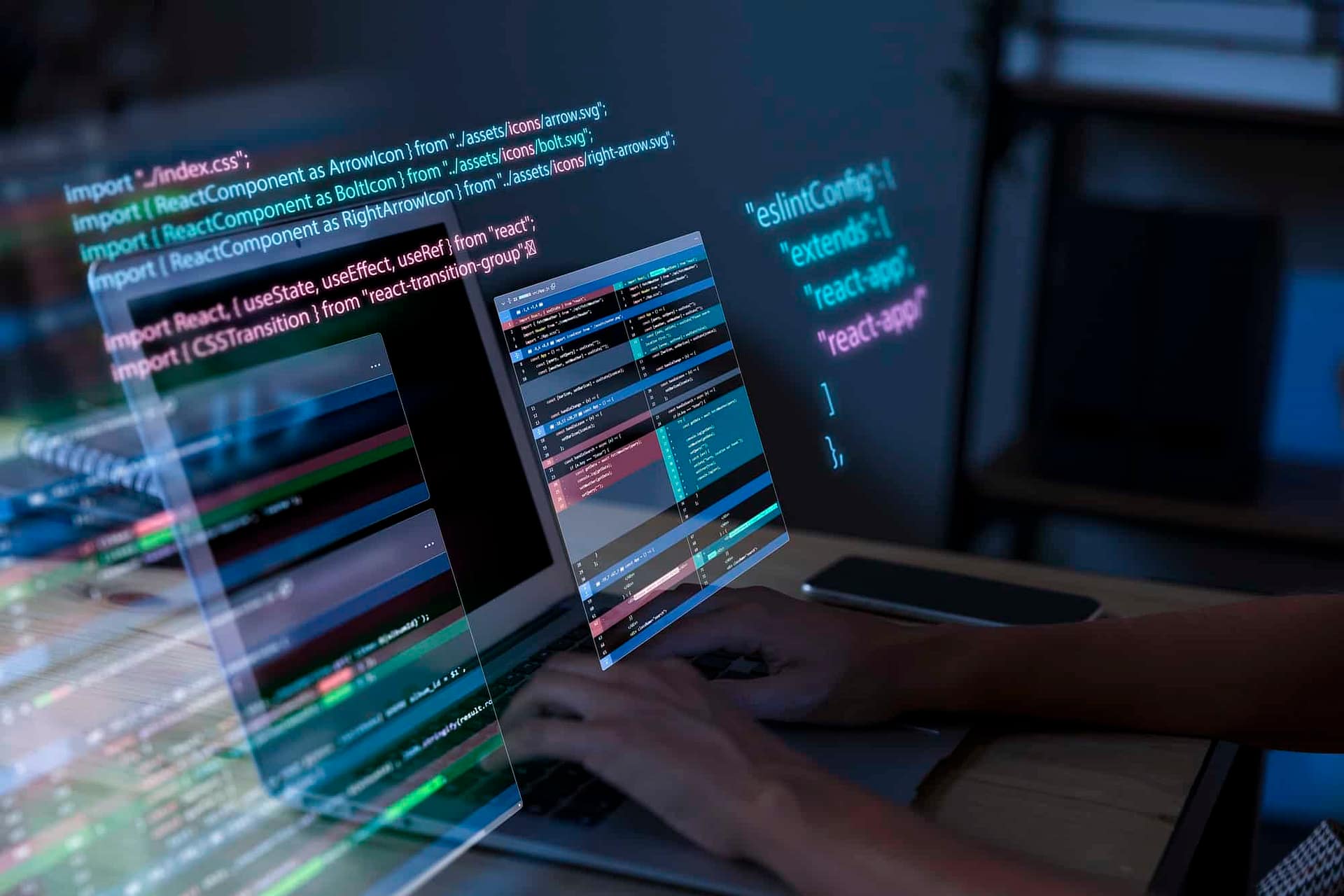
Imagine spending hours on each line of code is no longer necessary. Instead, you simply describe what the application should do, and the system instantly generates working code. That’s the essence of vibe coding – an innovative approach to AI-assisted programming gaining popularity in 2025 among developers and tech teams. It combines human creativity with artificial intelligence capabilities, making software development faster, more interactive programming-oriented, and more convenient. Experts highlight that today’s AI systems can interpret complex instructions in natural language with remarkable accuracy, making coding with AI a practical reality.
In conversational coding, interaction is key. The developer describes application features in natural language, and the AI programming assistant immediately generates code that can be tested, modified, and extended. It feels like a conversation with a technical partner who interprets your intentions and transforms them into concrete solutions. Teams often use this method to quickly explore different functionality variants without manually rewriting repetitive code blocks, fully embracing the interactive programming paradigm.
This approach doesn’t replace the developer; it acts as support. Vibe coding differs from classic pair programming – here, the second “partner” is an AI that helps transform ideas into working code efficiently. Professional developers can test alternative implementations using AI-assisted programming, while learners gain a tool to express requirements and see how the system converts them into functional solutions. Occasionally, the AI programming assistant generates unexpected suggestions that, although unconventional, are fully functional.
Vibe coding also opens up room for experimentation. AI can produce different feature variants, modify existing code, or create entirely new solutions. Iteration becomes fast and intuitive, while the risk of errors in repetitive elements drops significantly. Development teams’ analyses often emphasize that coding with AI can suggest solutions previously unconsidered, reducing development time by even tens of percent.
In summary, vibe coding shifts part of the work from manual coding to describing functionality while keeping full control with the developer. Programming by conversation and code via prompts become tools that allow ideas to materialize faster, more effectively, and more accessibly – both in commercial projects and educational processes. Many experts agree: AI doesn’t replace creativity but accelerates the path to the final result through AI-assisted programming and interactive programming.
Benefits of Vibe Coding

One of the biggest advantages of vibe coding is rapid prototyping. By leveraging AI-assisted programming and collaborating with an AI programming assistant, a developer can quickly generate functions and code fragments needed to test an idea. This is especially useful in startups and experimental projects where speed and flexibility matter. Instead of spending hours on manual coding, teams can focus on application logic and architecture, while interactive programming through coding with AI handles repetitive tasks efficiently. Experts note that rapid prototyping allows testing multiple solutions that would normally be postponed in traditional workflows.
| Benefit | Description |
|---|---|
| Rapid Prototyping | Generate functions and code fragments quickly using conversational coding, reducing the time from idea to working prototype. |
| Lower Entry Barrier | Non-technical users can describe features in natural language and, with programming by conversation, receive working code. |
| Support for Experienced Developers | Automation of repetitive tasks, templates, and unit tests through AI programming assistant allows focus on creative and strategic aspects. |
| Focus on Logic and Ideas | The AI handles code formatting and structure, enabling iterative testing of different feature variants using interactive programming. |
| Learning and Understanding | Interaction with AI shows how descriptions transform into code, supporting skill development through coding with AI and programming by conversation. |
In summary, the main benefits of vibe coding include rapid prototyping, time savings, lower entry barriers for beginners, support for experienced developers, focus on logic and ideas, and learning through interactive AI collaboration. Even novice developers can generate functional code snippets in minutes with AI-assisted programming and conversational coding, tasks that previously took much longer. This makes the method a valuable tool in educational, startup, and commercial projects, enabling testing of different concepts without concern for time-consuming corrections while leveraging the full potential of coding with AI and programming by conversation.
Limitations and Risks
Despite its many advantages, vibe coding also comes with limitations and risks that should be considered before adopting it in regular development workflows. A key factor is the quality of prompts – the descriptions of functionality in natural language. An imprecise or unclear description can lead to code errors, unintended application behavior, or multiple iterations. Teams working with this approach point out that poorly formulated instructions can generate code requiring extensive fixes, confirming that precise instructions are the foundation of effective vibe coding.
There is also the risk of errors and so-called code hallucinations. Even advanced AI systems can produce incorrect, suboptimal, or non-standard solutions. Developers need to remain vigilant, regularly test the code, and verify every generated element. Experts note that some AI suggestions may look correct at first glance but reveal logical flaws during testing.
Additional issues can arise in security and compliance. Generated code may not always follow the latest security standards, authorization mechanisms, or privacy policies. Careful review and adjustments are necessary to avoid vulnerabilities or legal non-compliance. Development teams often add an extra verification step before any AI-generated code reaches production.
Another aspect is the potential loss of control over code, especially for less experienced developers. Overreliance on AI can result in situations where the developer doesn’t fully understand the structure or logic of the application. Over time, this can hinder project development, debugging, or integration with other systems. AI should therefore be treated as a supportive tool, not a replacement for expert knowledge.
It’s also important to be aware of over-dependence on AI tools in software creation. Excessive use of automatically generated code can slow down the development of manual programming skills, logical thinking, and problem-solving – essential competencies for developers. Vibe coding should complement work, not replace it entirely.
This method – while useful – requires responsible use. The main limitations include dependence on prompt quality, risk of errors and code hallucinations, potential security issues, loss of control over application logic, and over-reliance on AI tools. A conscious approach and thorough developer oversight are key to fully leveraging the potential of vibe coding while minimizing risks. When used appropriately, the method can significantly increase productivity and creativity in development teams.
Vibe Coding in Practice – Use Cases

Vibe coding proves effective in many practical scenarios, from educational and startup projects to professional development teams. One common use case is creating prototypes and minimal viable products (MVPs). By collaborating with AI, a developer can quickly test ideas, generate core functionalities, and evaluate whether the project meets user expectations. This approach can reduce the time from concept to working prototype by up to several tens of percent compared to traditional coding.
Another practical application is automating repetitive code fragments. Many projects include standard templates, functions, or unit tests that must be recreated in every application. AI can generate these elements from descriptions, saving time and reducing errors caused by monotonous work. Developers can focus on more complex aspects, such as business logic or performance optimization.
Vibe coding is also valuable in learning programming. Students or beginner developers can input simple feature descriptions and observe how AI generates code. This accelerates understanding of application structure, function dependencies, and basic programming logic. Interactive learning through programming by conversation enhances comprehension of software creation and allows practical testing of ideas.
Another scenario is generating documentation and unit tests. AI can automatically produce function descriptions, code comments, and sample test cases, speeding up preparation of complete projects. In companies, this support allows development teams to focus on implementing new features rather than manually creating repetitive documents or test templates.
In practice, vibe coding can also support daily tasks in IT teams. AI doesn’t replace humans but enables more efficient management of repetitive tasks, accelerates bug fixes, and allows faster prototyping of new features. Developers can focus on strategic project aspects and creative challenges while routine work is handled by the system.
Overall, vibe coding is applicable in prototyping, automation of repetitive tasks, programming education, documentation and test generation, and team support. In each scenario, the method increases efficiency, shortens delivery time, and allows focus on key project aspects, while maintaining an educational and supportive AI collaboration.
Why Vibe Coding is Emerging Now
The popularity of vibe coding is closely linked to recent technological advances. Large language models (LLMs) reached a level in 2024–2025 that enables generating increasingly complex code in real time. Previously, AI could assist with simple code fragments, but now systems like ChatGPT, GitHub Copilot, and Claude can support developers in more complex projects.
No-code and low-code trends allow users to deploy apps and prototype ideas faster, even without deep programming knowledge. Vibe coding fits into this trend, offering access to code generation using natural language descriptions.
The rise of prompt engineering as a professional skill is becoming increasingly important – crafting precise prompts allows effective use of AI in development projects.
More “natural” interfaces make interaction with systems intuitive and fast – instead of learning syntax details, developers can converse directly with AI.
| Factor | Description | Example / Link |
|---|---|---|
| LLM Development | Language models can generate increasingly complex code in real time. | ChatGPT, GitHub Copilot, Claude |
| No-code / Low-code Trends | Enable faster prototyping and app creation without advanced programming knowledge. | Bubble, Adalo, Glide |
| Prompt Engineering Growth | The ability to craft precise prompts allows effective AI use in development projects. | Practical applications in vibe coding projects |
| Natural Interfaces | Enable intuitive interaction with AI through conversation rather than line-by-line coding. | Programming by conversation |
The current moment favors the growth of vibe coding due to the combination of advanced language models, no-code/low-code trends, the increasing importance of prompt engineering, and the demand for more natural technological interaction. Together, these factors make the method a practical and tangible tool in the daily work of developers and independent project creators.
The Future of Programming Through Conversation with AI

The future of AI-assisted programming through programming by conversation looks promising, although full replacement of traditional coding methods remains uncertain. One potential direction is deeper integration of vibe coding and conversational coding with popular development environments and DevOps tools. Imagine an IDE fully supporting natural language interaction, generating code, unit tests, documentation, and integrating seamlessly with CI/CD systems. Such integration could significantly speed up deployment and reduce errors from manual coding.
Another important aspect is application in education and skill development. Collaboration with an AI programming assistant allows developers to see how natural language descriptions translate into working code, enhancing understanding of application logic and project structure. Beginners and experienced developers alike can learn new programming languages, frameworks, or design patterns faster through interactive programming and coding with AI in a supportive environment.
It is also possible that fully autonomous tools will appear, capable of generating complete applications from detailed descriptions. However, in the near future, a collaborative model where AI acts as an assistant and humans retain control over key design decisions is more likely. This ensures responsible software creation while leveraging the benefits of AI-assisted programming and programming by conversation.
Integration of vibe coding and conversational coding with DevOps processes has great potential. Automatic generation of code, tests, and documentation through coding with AI can be embedded into CI/CD pipelines, increasing team efficiency and shortening time from idea to deployment. Moreover, interactive programming could become standard in code review, providing real-time suggestions and optimizations.
Overall, the future of vibe coding represents an evolution of traditional methods towards collaborative AI-assisted programming. While it may not fully replace classic coding, it becomes an essential tool supporting developers, boosting productivity, enabling faster learning, and allowing focus on creativity. As AI models and DevOps integrations advance, programming by conversation and interactive programming may become standard in the tech industry.
Conclusion
Vibe coding represents a new stage in software development, where collaboration with an AI programming assistant allows generating code from natural language descriptions. This approach makes development more interactive, dynamic, and accessible for developers of all skill levels. It supports rapid prototyping, automation of repetitive tasks, programming education, and generation of documentation and tests, while allowing developers to focus on logic and creativity.
However, limitations remain: the quality of generated code depends on prompt clarity, and AI may make mistakes or produce suboptimal solutions. Conscious use of AI-assisted programming, developer oversight, and iterative testing are necessary to fully leverage the benefits while minimizing risks.
The current popularity of vibe coding is driven by the development of LLM models, no-code and low-code trends, and growing importance of conversational coding and programming by conversation. It provides a natural way to interact with technology, enabling faster, more accessible code creation through coding with AI and interactive programming.
Looking forward, AI-assisted programming could become standard in daily developer workflows. Integration with IDEs, DevOps systems, and CI/CD pipelines will increase productivity, shorten deployment time, and maintain developer control over key decisions, ensuring responsible and high-quality software creation.
In summary, vibe coding is a valuable tool for advancing technology and programming education. It enhances efficiency, fosters creativity, and, with proper implementation of programming by conversation and interactive programming, may become a standard approach for developers worldwide.
Expert Advice
The editorial team, in collaboration with AI experts and developers, notes that vibe coding — programming through conversation with AI — is a promising paradigm that enhances experimentation and workflow, but does not eliminate the need for programming knowledge.
In the study “Vibe coding: programming through conversation with artificial intelligence”, the authors describe how developers go through iterative cycles using natural language commands, testing code, and manually applying corrections — showing that trust in AI is built gradually, and developer expertise remains essential. (arXiv)
The qualitative study “Good Vibrations? A Qualitative Study of Co‑Creation, Communication, Flow, and Trust in Vibe Coding” shows that developers experience flow and satisfaction when collaborating with AI, but also highlight challenges: specification, debugging, and the reliability of generated code require human oversight. (arXiv)
- Specify goals in prompts: clear, descriptive commands guide AI better and produce more accurate code.
- Verify generated code: even if AI produces correct fragments, test, review logic, and debug manually.
- Treat AI as a partner, not a replacement: your knowledge and oversight are crucial — AI supports, but does not make all decisions.
For development teams, the editorial recommendation is clear: experiment with vibe coding in prototypes or small projects. Take advantage of AI interaction benefits, but maintain control and code verification — this maximizes productivity without risking quality.
Support My Work
Thank you for reading this post! If you found it helpful, you can buy me a coffee ☕.
It’s a huge motivation for me to keep creating content about online earning and AI.

Sebastian is an AI and digital marketing expert who has been testing online tools and revenue generation strategies for years. This article was prepared by him in collaboration with our team of experts, who contribute knowledge in content marketing, UX, process automation, and programming. Our goal is to provide verified, practical, and valuable information that helps readers implement effective online strategies.