

AI and the job market have become one of the hottest topics in today’s global debate. The technological revolution is accelerating faster than ever before, and many professionals are asking themselves: what’s next for my career? In the era of artificial intelligence, does my job still matter? Will AI replace human work, or will it reshape it—creating new roles and fresh opportunities along the way?
The rise of artificial intelligence in the workplace brings both incredible opportunities and real challenges. On one hand, we’re seeing growing efficiency, streamlined workflows, and access to smart tools that make everyday tasks easier. On the other hand, questions about the impact of AI on employment are growing louder. Will robots truly replace people? Or will digital skills and the ability to collaborate with AI become the new competitive edge in the modern job market?
In this article, we’ll take a closer look at how AI and the job market are evolving across different fields—from administration and finance to education, technology, and the creative industries. The goal isn’t to spread panic, but to understand the real transformation that’s already underway—and to prepare for it in practical ways.
Instead of resisting inevitable technological change, it’s worth learning how to make it your ally. Toward the end of this post, you’ll find actionable tips for developing future-ready skills and building professional resilience, so that in a world shaped by automation and future jobs, you can find your place—and thrive as AI continues to transform work.
AI and the Job Market: Opportunity or Threat?
Just a few years ago, automation and future jobs mostly brought to mind factory lines and industrial robots. Today, however, artificial intelligence in the workplace has moved far beyond manufacturing — into creativity, data analysis, customer service, and even education. The AI revolution now touches not only IT professionals but nearly every industry where information is processed or decisions are made.
What once sounded like science fiction is now part of everyday life. The rise of generative tools like ChatGPT, Midjourney, and Copilot means that the question of AI and the job market isn’t about the future — it’s about the present. The good news? In most cases, AI isn’t replacing humans — it’s supporting them. The bad news? Those who don’t learn to work effectively with AI risk being left behind.
So what changes are we already seeing? Here are a few key facts that illustrate how the job market is transforming in the era of AI:
- AI automates repetitive tasks — such as reporting, handling emails, or analyzing large data sets — freeing up time for more creative and conceptual work.
- New job roles are emerging faster than old ones disappear — including AI operators, prompt specialists, prompt engineers, and language model trainers.
- The ability to work with AI has become a crucial future skill — one that can determine promotion opportunities, career shifts, or competitiveness in the workforce.
- Entrepreneurs and freelancers are using AI to scale their businesses, boost marketing efficiency, and serve more clients — all without hiring additional staff.
All of this leads to one simple conclusion: AI and the job market represent not only a challenge but also a tremendous opportunity. The key lies in how fast we adapt. Up next, we’ll explore real-world examples of professions that are already evolving before our eyes — and what they tell us about the impact of AI on employment.
1. Translators and Copywriters
Not long ago, no one expected that AI and the job market would so quickly affect creative professions. Meanwhile, tools like DeepL, Google Translate, and ChatGPT can generate texts and translations in seconds. Does this mean translators and copywriters are becoming redundant?
No. This isn’t the end of these professions — it’s the start of their transformation. Those who learn to collaborate with artificial intelligence in the workplace will gain the most. Rather than writing everything from scratch, they become editors, content strategists, and guardians of tone and voice. They’re the ones who will give machine-generated copy its emotion and personality.
A modern language workflow often looks like this:
- AI creates the first draft — quick and grammatically correct,
- a human edits, polishes the style, and injects a unique tone,
- then optimization follows for SEO, brand, and audience.
Automation and future jobs now touch even such a “human” field as writing. Clients expect more than raw content — they want authenticity, brand consistency, and sometimes humour, emotion, or storytelling. Right now, there’s still no substitute for a skilled human specialist. The impact of AI on employment in this area isn’t about replacing people, but about changing their role.
Today’s translator or copywriter uses AI tools as assistants that speed up the creative process without taking over the final result. That means time-to-publish decreases, while the value of creative thinking, contextual analysis, and personalised messaging grows. Companies increasingly hire specialists who can combine linguistic precision with AI fluency — the translator-strategist or tech-savvy copywriter will be highly sought after in the coming years.
So, working with artificial intelligence in the workplace isn’t optional — it’s a necessity. Those who can blend language skills with technology earn a competitive advantage and build resilience for the future of work. They prove that AI and the job market are not a threat but an evolution of competencies.
2. Graphic Designer

Significant changes in the job market have also occurred in the creative industry. Tools like Midjourney, Leonardo AI, and DALL·E can now generate high-quality illustrations, mockups, and images in moments. What once took hours of work can now be done in minutes. Does this mean the end of work for graphic designers?
Absolutely not. It’s more the beginning of a new chapter. Artificial intelligence in the designer’s workplace has become a powerful, yet demanding, tool. The designer of the future isn’t just someone proficient in Photoshop — they are the conductor of the visual process. They decide the aesthetic direction, blend AI-generated elements with real materials, and ensure brand consistency.
New responsibilities for designers may include:
- creating prompts for image generation,
- editing and combining AI-generated content with original designs,
- overseeing the creative process involving both AI and humans.
The future of graphic professions doesn’t mean replacing creators but evolving their role. Creativity, aesthetic intuition, and audience understanding remain essential. Companies may use AI to create simple stock graphics, but it’s the human who gives projects uniqueness and emotional impact.
This example clearly illustrates how AI and the job market drive changes in workflows without eliminating specialists — on the contrary, they increase demand for those who can combine technology with humanity.
3. Teacher and Educator
Artificial intelligence in the teacher’s workplace is a topic that sparks strong opinions. On one hand, there’s excitement over tools like Khanmigo, Scribe AI, or Curipod, which personalize content, generate tests, and analyze student progress. On the other hand, there are concerns that technology might replace traditional teachers. What’s the reality?
In fact, AI and the job market in education doesn’t eliminate teaching; it enhances it. A teacher’s true value isn’t just in delivering knowledge but in building relationships, inspiring students, and developing soft skills. In this role, AI can be an excellent support — but not a replacement.
The 21st-century teacher is not only a source of knowledge. They are primarily:
- a mentor who can integrate technology with empathy and communication,
- a critical thinking coach — a skill essential in the age of fake news and deepfakes,
- an architect of the learning environment who creates spaces for inquiry, experimentation, and safe mistakes.
This profession clearly shows that changes in the job market don’t have to mean replacing people but redefining their roles. AI can support teachers — analyzing progress, creating student-level content, suggesting resources — but humans remain responsible for motivation, inspiration, and student development.
Therefore, the future of professions in education depends on how skillfully teachers integrate AI into their workflow. Students don’t just need information — they need people who can teach them how to use that information wisely.
4. Customer Service Specialist

Until recently, most companies relied on customer service teams working via phone and email. Today, automation and future jobs in this sector are advancing rapidly: voicebots, chatbots, and AI agents can solve a huge number of problems in seconds. Does this mean customer service is a profession doomed to extinction?
Absolutely not. This is another example of how AI and the job market doesn’t mean job elimination, but evolution. Today, companies need people who can work hand-in-hand with technology — while still providing something AI cannot offer anytime soon: empathy, personalized care, and deep understanding of customer needs.
The modern customer service specialist is not just a “phone consultant.” They are:
- responsible for premium relational service — for strategic or high-demand clients,
- a business partner for sales and marketing teams — translating market signals into actionable initiatives,
- an automation architect — designing processes executed by AI but supervised by humans.
Customers increasingly expect fast responses — but they don’t want to feel like just a number in the system. That’s why the value of specialists who can combine data with empathy is rising. The impact of AI on employment in customer service involves shifting people toward more relational, expert, and strategic roles.
This is further proof that artificial intelligence in the workplace doesn’t take away jobs — it forces redefinition and upskilling of professions.
5. Data Analyst
In a world overloaded with information, the role of a data analyst is becoming increasingly crucial — and at the same time, it’s evolving rapidly. Automation and future jobs in this field are advancing fast, as artificial intelligence can process massive datasets in a fraction of the time it would take a human. But does this mean analysts are no longer needed?
Not at all. On the contrary. AI can detect correlations, anomalies, and patterns, but it’s the human who understands their significance in a business, social, or market context. Algorithms don’t know a company’s strategy, its sales goals, or what a specific change in user behavior means. This clearly shows how AI and the job market rely not on replacing humans but on creating effective human + machine collaboration models.
The role of the data analyst in the AI era is shifting from a “pure processor” to a translator of data into decisions. Here’s what this profession looks like in the new reality:
- Interpreting results and formulating recommendations with strategic value.
- Collaborating with marketing, sales, and IT departments — connecting data to specific business objectives.
- Ensuring data quality, monitoring ethics and algorithm transparency — increasingly important topics in the AI era.
Increasingly, we hear about a new role — augmented analysts, specialists supported by AI who combine machine speed with human intuition and context. These are professionals who not only understand data but can also translate it into concrete actions — something algorithms alone cannot yet achieve.
In this profession, it’s clear that artificial intelligence in the workplace can become a partner rather than a competitor. At the same time, it underscores the importance of adaptability, as changes in the job market in this area are happening exceptionally fast.
6. Programmer / Developer
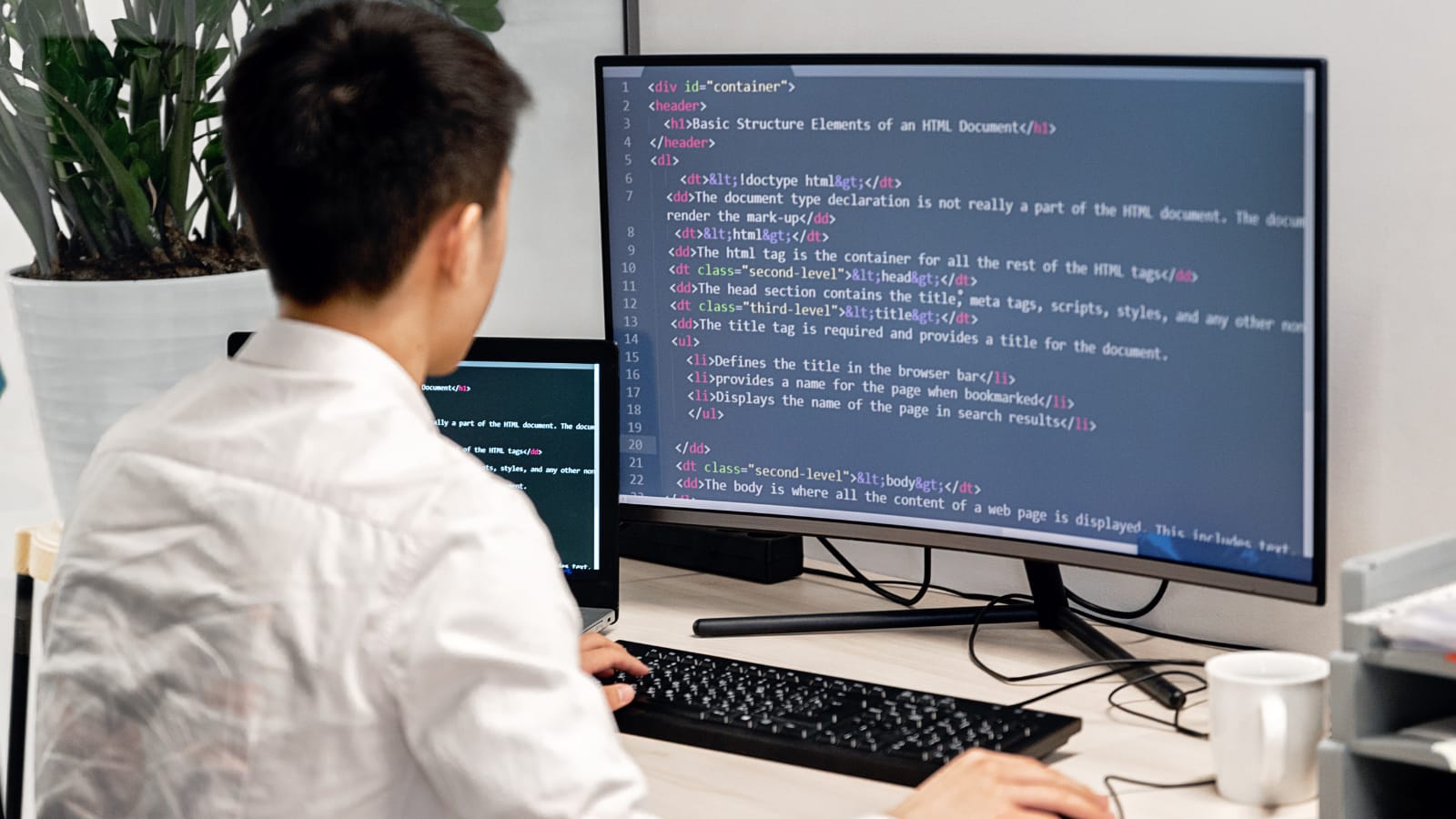
Programmers were among the first to adopt AI tools on a large scale. GitHub Copilot, CodeWhisperer, as well as solutions for code refactoring and automatic function generation — all of these have become part of the daily workflow. This changes not only how programming is done, but also who can program.
Contrary to what some might think, AI and the job market in IT does not reduce the number of specialists. On the contrary — demand for professionals who can leverage AI and understand complex systems continues to grow. While AI can write a function, it cannot yet independently design a coherent, secure, and scalable architecture.
The programmer of 2025 is no longer just a “coder,” but also:
- system architect — thinking holistically about structure and dependencies,
- AI partner — using generative tools to speed up work,
- specialist in testing, security, and integration — areas where AI mistakes can be costly.
This is a profession that has gained powerful support — but also requires constant learning and adaptation. Automation and future jobs mean that basic tasks are now handled by AI, but humans set direction, ensure quality, and take responsibility for the final outcome.
Good programmers won’t disappear. Those who fail to work in the “human + AI” model will. Because such collaboration is becoming the foundation of the future of professions in the IT industry.
7. Marketing Specialist
Few industries experience changes in the job market as dynamically as marketing. Until recently, campaigns took weeks to create — today, many can be planned, generated, and optimized in a single day using AI. Algorithms predict customer behavior, personalize content, and analyze ad performance in real time.
However, AI and the job market in marketing is not just about automation. It’s also a challenge: how to maintain authenticity, create campaigns that connect emotionally, and build relationships with customers? While a machine can generate content, it still does not understand audience psychology, intent, or cultural context.
The modern marketer uses AI to:
- create content 10 times faster — while keeping the unique brand tone,
- test and optimize ads in real time,
- personalize communication — not only at the target group level but for individual clients.
In an era where the internet is flooded with repetitive content, the advantage goes to those who combine technology with deep human understanding. Artificial intelligence in the workplace is a tool — but humans provide direction, narrative, and emotion.
Therefore, the future of professions in marketing belongs to those who can think strategically, act creatively, and use AI not as a replacement — but as a catalyst.
Summary: AI and the Job Market – What’s Next?
AI and the job market do not mark the end, but a completely new stage in the history of work. Rather than seeing artificial intelligence as a threat, it’s worth treating it as a powerful tool that can significantly enhance and enrich our work. The future is not about fighting technology, but about using it wisely and consciously. In this race for jobs, those resistant to change and new solutions will face the greatest losses, while those who embrace transformation and adapt quickly will gain the most.
It’s important to remember that AI will not replace all professions — instead, it will revolutionize many industries, changing the nature of work and the skills required. AI allows people to focus on creative, strategic, and interpersonal tasks, while routine and repetitive activities are handled by technology. This is a huge opportunity for professional growth and improved work-life quality, provided we learn to collaborate with AI effectively.
How to Prepare for the Changes?
- Regularly update your digital skills. The job market is evolving fast, and technology is advancing at an unprecedented pace. Continuous learning through online courses, webinars, industry articles, and reports will be your greatest asset. Understanding digital tools and tech trends will give you a significant advantage.
- Learn to use AI tools: ChatGPT, Midjourney, Claude, AutoGen Studio. Instead of fearing new technology, invest time in mastering its practical applications. Learning to use AI allows you to automate tasks, speed up processes, and improve the quality of your work. The sooner you master these tools, the more competitive you will be in the job market.
- Join communities: Facebook groups, forums, webinars. Sharing knowledge and experiences with other professionals is an effective way to learn quickly and solve problems. Online communities provide support, inspiration, and access to the latest information on AI and technology. Collaborating with others helps you understand how to apply AI practically in your field.
- Integrate AI into your daily work — even in small tasks. Don’t wait for changes to force adaptation. Start using AI today for small tasks like organizing your calendar, creating reports, writing content, or analyzing data. This helps you get comfortable with new tools and build habits that will make your work much easier in the future.
The sooner you start, the greater your advantage in the job market. Don’t fear the future — see it as a challenge and an opportunity for personal and professional growth. The future isn’t something that happens to us — it’s something we can shape. So start acting today, invest in yourself, embrace new technologies, and you will thrive in the AI era.
Expert Advice
The editorial team, together with labor market analysts and AI adoption experts, emphasizes that AI is transforming professions rather than merely eliminating jobs. Success in this evolving environment depends on reskilling, adaptability, and leveraging AI as a collaborative tool.
According to the World Economic Forum Future of Jobs Report 2025, while 92 million jobs may be displaced by AI by 2030, about 170 million new roles are expected to emerge globally — highlighting a net increase of 78 million jobs.
Research also shows that roles with high exposure to AI are seeing rising demand for complementary human skills such as digital literacy, critical thinking, and collaboration. (McKinsey & Company, 2024)
- Invest in human-centric skills: soft skills, creativity, ethics, and communication remain essential for hybrid AI-human workplaces.
- Commit to lifelong learning: regularly update your competencies and learn to work alongside AI tools to access new roles, such as prompt engineering, AI-assisted analytics, and digital marketing strategist positions.
- Use AI as a partner: automate repetitive tasks while focusing human effort on strategic decisions, complex problem-solving, and relationship management.
In conclusion, the editorial recommendation is clear: embrace AI-driven change proactively. Combining technical awareness with human skills and adaptability allows workers to transform disruption into opportunity and remain competitive in the 2025 job market and beyond.
Support My Work
Thank you for reading this post! If you found it useful, you can buy me a coffee ☕.
It’s a huge motivation for me to keep creating content about making money online and AI.

Sebastian is an AI and digital marketing expert who has been testing online tools and revenue-generating strategies for years. This article was prepared by him in collaboration with our team of experts, who contribute their knowledge in content marketing, UX, process automation, and programming. Our goal is to provide reliable, practical, and valuable information that helps readers implement effective online strategies.